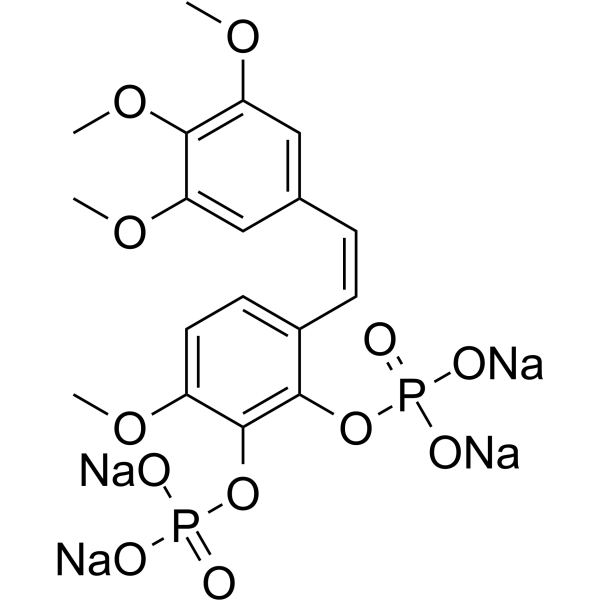
Combretastatin A-1 phosphate tetrasodium Chemical Structure
CAS No. : 288847-34-7
规格
是否有货
100 mg
询价
250 mg
询价
500 mg
询价
* Please select Quantity before adding items.
生物活性
Combretastatin A-1 phosphate (OXi-4503) tetrasodium, a prodrug of Combretastatin A-1, is a microtubule polymerization inhibitor that binds to the colchicine-binding site of tubulin. Combretastatin A-1 phosphate tetrasodium inhibits the Wnt/β-catenin pathway through tubulin depolymerization mediated AKT deactivation. Combretastatin A-1 phosphate tetrasodium exhibits anti-tumor and anti-vascular effects[1][2][3].
IC50 & Target
Microtubule/Tubulin[1]
体外研究 (In Vitro)
Combretastatin A-1 phosphate (72 h) inhibits the growth of various tumor cell lines in vitro, including HepG2, SMMC-7721, Hepa 1-6, LM-3, Bel-7402, Huh7, BGC-803, MDA-MB-231, MCF-7, A375, NCI-1975, CT-26, HT-29, A549 cells (IC50=9.2, 12.8, 32.9, 33.8, 38.4, 728.2, 12.2, 17.6, 46.0, 61.0, 256.3, 1075.0, 2082.0, 2247.0 nM, respectively)[2]. Combretastatin A-1 phosphate (1-10 nM; 24 h) induces apoptosis by microtubule depolymerization-induced AKT inactivation and the removal of GSK-3β inhibition in HepG2 cells[2]. Combretastatin A-1 phosphate (1-50 nM; 6 h) decreases the mitochondrial membrane potential (MMP) of HepG2 cells. Combretastatin A-1 shows dose-dependently ROS accumulation in HepG2 cells[2].
Shanghai Jinpan Biotech Co Ltd has not independently confirmed the accuracy of these methods. They are for reference only.
Western Blot Analysis[2]
Cell Line:
HepG2 cells
Concentration:
1, 5, 10 nM
Incubation Time:
24 hours
Result:
Significantly decreased Mcl-1 expression, but the Bcl-2 level was unchanged. Reduced p-GSK 3β (Ser9) without altering total GSK-3β protein levels, indicating an activation of GSK-3β. Reduced AKT phosphorylation on Ser473 without an obvious change in the total AKT protein levels.
体内研究 (In Vivo)
Combretastatin A-1 phosphate (1-4 mg/kg; i.v. every other day for 4 weeks) significantly reduces the tumor volume in HepG2 subcutaneous xenograft model[2]. Combretastatin A-1 phosphate (2 mg/kg; every other day for 21 days) shows enhanced apoptosis in orthotopic hepatocellular carcinoma mouse model[2].
Shanghai Jinpan Biotech Co Ltd has not independently confirmed the accuracy of these methods. They are for reference only.
Animal Model:
Male athymic BALB/c nu/nu mice (16-18 g; 4-6 weeks old) were inoculated with HepG2 cells[2]
Dosage:
1, 2, 4 mg/kg
Administration:
I.v. every other day for 4 weeks
Result:
Resulted in a significant tumor volume reduction at the dose of 2 mg/kg or 4 mg/kg.
分子量
580.23
Formula
C18H18Na4O12P2
CAS 号
288847-34-7
运输条件
Room temperature in continental US; may vary elsewhere.
储存方式
Please store the product under the recommended conditions in the Certificate of Analysis.
参考文献
[1]. Stratford MRL, et, al. Quantitative determination of the anticancer prodrug combretastatin A1 phosphate (OXi4503, CA1P), the active CA1 and its glucuronide metabolites in human urine and of CA1 in plasma by HPLC with mass spectrometric detection. J Chromatogr B Analyt Technol Biomed Life Sci. 2012 Jun 1;898:1-6.
[2]. Mao J, et, al. Combretastatin A-1 phosphate, a microtubule inhibitor, acts on both hepatocellular carcinoma cells and tumor-associated macrophages by inhibiting the Wnt/β-catenin pathway. Cancer Lett. 2016 Sep 28;380(1):134-43.
[3]. Holwell SE, et, al. Anti-tumor and anti-vascular effects of the novel tubulin-binding agent combretastatin A-1 phosphate. Anticancer Res. Nov-Dec 2002;22(6C):3933-40.
Combretastatin A-1 phosphate tetrasodium Chemical Structure
CAS No. : 288847-34-7
规格
是否有货
100 mg
询价
250 mg
询价
500 mg
询价
* Please select Quantity before adding items.
生物活性
Combretastatin A-1 phosphate (OXi-4503) tetrasodium, a prodrug of Combretastatin A-1, is a microtubule polymerization inhibitor that binds to the colchicine-binding site of tubulin. Combretastatin A-1 phosphate tetrasodium inhibits the Wnt/β-catenin pathway through tubulin depolymerization mediated AKT deactivation. Combretastatin A-1 phosphate tetrasodium exhibits anti-tumor and anti-vascular effects[1][2][3].
IC50 & Target
Microtubule/Tubulin[1]
体外研究 (In Vitro)
Combretastatin A-1 phosphate (72 h) inhibits the growth of various tumor cell lines in vitro, including HepG2, SMMC-7721, Hepa 1-6, LM-3, Bel-7402, Huh7, BGC-803, MDA-MB-231, MCF-7, A375, NCI-1975, CT-26, HT-29, A549 cells (IC50=9.2, 12.8, 32.9, 33.8, 38.4, 728.2, 12.2, 17.6, 46.0, 61.0, 256.3, 1075.0, 2082.0, 2247.0 nM, respectively)[2]. Combretastatin A-1 phosphate (1-10 nM; 24 h) induces apoptosis by microtubule depolymerization-induced AKT inactivation and the removal of GSK-3β inhibition in HepG2 cells[2]. Combretastatin A-1 phosphate (1-50 nM; 6 h) decreases the mitochondrial membrane potential (MMP) of HepG2 cells. Combretastatin A-1 shows dose-dependently ROS accumulation in HepG2 cells[2].
上海金畔生物科技有限公司 has not independently confirmed the accuracy of these methods. They are for reference only.
Western Blot Analysis[2]
Cell Line:
HepG2 cells
Concentration:
1, 5, 10 nM
Incubation Time:
24 hours
Result:
Significantly decreased Mcl-1 expression, but the Bcl-2 level was unchanged. Reduced p-GSK 3β (Ser9) without altering total GSK-3β protein levels, indicating an activation of GSK-3β. Reduced AKT phosphorylation on Ser473 without an obvious change in the total AKT protein levels.
体内研究 (In Vivo)
Combretastatin A-1 phosphate (1-4 mg/kg; i.v. every other day for 4 weeks) significantly reduces the tumor volume in HepG2 subcutaneous xenograft model[2]. Combretastatin A-1 phosphate (2 mg/kg; every other day for 21 days) shows enhanced apoptosis in orthotopic hepatocellular carcinoma mouse model[2].
上海金畔生物科技有限公司 has not independently confirmed the accuracy of these methods. They are for reference only.
Animal Model:
Male athymic BALB/c nu/nu mice (16-18 g; 4-6 weeks old) were inoculated with HepG2 cells[2]
Dosage:
1, 2, 4 mg/kg
Administration:
I.v. every other day for 4 weeks
Result:
Resulted in a significant tumor volume reduction at the dose of 2 mg/kg or 4 mg/kg.
分子量
580.23
Formula
C18H18Na4O12P2
CAS 号
288847-34-7
运输条件
Room temperature in continental US; may vary elsewhere.
储存方式
Please store the product under the recommended conditions in the Certificate of Analysis.
参考文献
[1]. Stratford MRL, et, al. Quantitative determination of the anticancer prodrug combretastatin A1 phosphate (OXi4503, CA1P), the active CA1 and its glucuronide metabolites in human urine and of CA1 in plasma by HPLC with mass spectrometric detection. J Chromatogr B Analyt Technol Biomed Life Sci. 2012 Jun 1;898:1-6.
[2]. Mao J, et, al. Combretastatin A-1 phosphate, a microtubule inhibitor, acts on both hepatocellular carcinoma cells and tumor-associated macrophages by inhibiting the Wnt/β-catenin pathway. Cancer Lett. 2016 Sep 28;380(1):134-43.
[3]. Holwell SE, et, al. Anti-tumor and anti-vascular effects of the novel tubulin-binding agent combretastatin A-1 phosphate. Anticancer Res. Nov-Dec 2002;22(6C):3933-40.
Combretastatin A-1 phosphate tetrasodium Chemical Structure
CAS No. : 288847-34-7
规格
是否有货
100 mg
询价
250 mg
询价
500 mg
询价
* Please select Quantity before adding items.
生物活性
Combretastatin A-1 phosphate (OXi-4503) tetrasodium, a prodrug of Combretastatin A-1, is a microtubule polymerization inhibitor that binds to the colchicine-binding site of tubulin. Combretastatin A-1 phosphate tetrasodium inhibits the Wnt/β-catenin pathway through tubulin depolymerization mediated AKT deactivation. Combretastatin A-1 phosphate tetrasodium exhibits anti-tumor and anti-vascular effects[1][2][3].
IC50 & Target
Microtubule/Tubulin[1]
体外研究 (In Vitro)
Combretastatin A-1 phosphate (72 h) inhibits the growth of various tumor cell lines in vitro, including HepG2, SMMC-7721, Hepa 1-6, LM-3, Bel-7402, Huh7, BGC-803, MDA-MB-231, MCF-7, A375, NCI-1975, CT-26, HT-29, A549 cells (IC50=9.2, 12.8, 32.9, 33.8, 38.4, 728.2, 12.2, 17.6, 46.0, 61.0, 256.3, 1075.0, 2082.0, 2247.0 nM, respectively)[2]. Combretastatin A-1 phosphate (1-10 nM; 24 h) induces apoptosis by microtubule depolymerization-induced AKT inactivation and the removal of GSK-3β inhibition in HepG2 cells[2]. Combretastatin A-1 phosphate (1-50 nM; 6 h) decreases the mitochondrial membrane potential (MMP) of HepG2 cells. Combretastatin A-1 shows dose-dependently ROS accumulation in HepG2 cells[2].
Shanghai Jinpan Biotech Co Ltd has not independently confirmed the accuracy of these methods. They are for reference only.
Western Blot Analysis[2]
Cell Line:
HepG2 cells
Concentration:
1, 5, 10 nM
Incubation Time:
24 hours
Result:
Significantly decreased Mcl-1 expression, but the Bcl-2 level was unchanged. Reduced p-GSK 3β (Ser9) without altering total GSK-3β protein levels, indicating an activation of GSK-3β. Reduced AKT phosphorylation on Ser473 without an obvious change in the total AKT protein levels.
体内研究 (In Vivo)
Combretastatin A-1 phosphate (1-4 mg/kg; i.v. every other day for 4 weeks) significantly reduces the tumor volume in HepG2 subcutaneous xenograft model[2]. Combretastatin A-1 phosphate (2 mg/kg; every other day for 21 days) shows enhanced apoptosis in orthotopic hepatocellular carcinoma mouse model[2].
Shanghai Jinpan Biotech Co Ltd has not independently confirmed the accuracy of these methods. They are for reference only.
Animal Model:
Male athymic BALB/c nu/nu mice (16-18 g; 4-6 weeks old) were inoculated with HepG2 cells[2]
Dosage:
1, 2, 4 mg/kg
Administration:
I.v. every other day for 4 weeks
Result:
Resulted in a significant tumor volume reduction at the dose of 2 mg/kg or 4 mg/kg.
分子量
580.23
Formula
C18H18Na4O12P2
CAS 号
288847-34-7
运输条件
Room temperature in continental US; may vary elsewhere.
储存方式
Please store the product under the recommended conditions in the Certificate of Analysis.
参考文献
[1]. Stratford MRL, et, al. Quantitative determination of the anticancer prodrug combretastatin A1 phosphate (OXi4503, CA1P), the active CA1 and its glucuronide metabolites in human urine and of CA1 in plasma by HPLC with mass spectrometric detection. J Chromatogr B Analyt Technol Biomed Life Sci. 2012 Jun 1;898:1-6.
[2]. Mao J, et, al. Combretastatin A-1 phosphate, a microtubule inhibitor, acts on both hepatocellular carcinoma cells and tumor-associated macrophages by inhibiting the Wnt/β-catenin pathway. Cancer Lett. 2016 Sep 28;380(1):134-43.
[3]. Holwell SE, et, al. Anti-tumor and anti-vascular effects of the novel tubulin-binding agent combretastatin A-1 phosphate. Anticancer Res. Nov-Dec 2002;22(6C):3933-40.
NADPH tetrasodium salt 是多种代谢和生物合成途径中的重要辅助因子 (cofactor)。NADPH tetrasodium salt 在药物、手性醇、脂肪酸和生物聚合物的生物合成中起着至关重要的作用,同时也是脂质生物合成、生物量形成和细胞复制所必需的。对 NADPH 的需求在增殖的癌细胞中特别高,在那里它作为核苷酸、蛋白质和脂肪酸合成的辅助因子。NADPH tetrasodium salt 对于中和代谢活性增加产生的高水平活性氧 (ROS) 也是必不可少的。NADPH tetrasodium salt 是一种内源性的 ferroptosis 抑制剂。
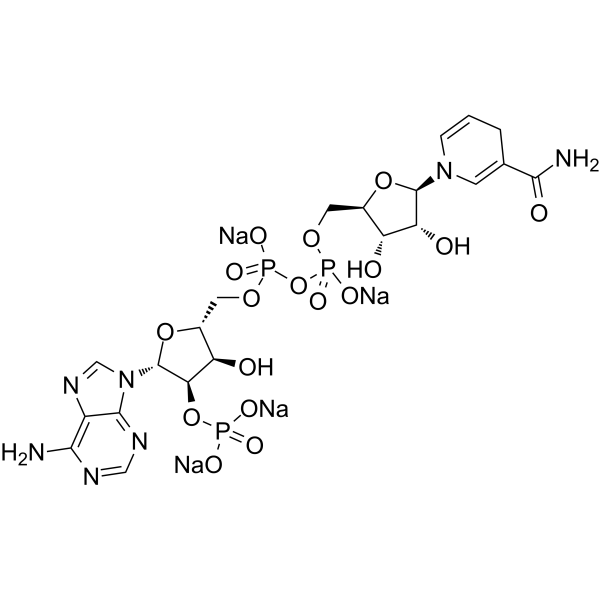
NADPH tetrasodium salt Chemical Structure
CAS No. : 2646-71-1
规格
价格
是否有货
数量
Free Sample (0.1-0.5 mg)
Apply now
10 mM * 1 mL in Water
¥550
In-stock
50 mg
¥500
In-stock
100 mg
¥800
In-stock
200 mg
询价
500 mg
询价
* Please select Quantity before adding items.
NADPH tetrasodium salt 相关产品
•相关化合物库:
Bioactive Compound Library Plus
Apoptosis Compound Library
Metabolism/Protease Compound Library
Anti-Cancer Compound Library
Human Endogenous Metabolite Compound Library
Anti-Aging Compound Library
Nucleotide Compound Library
Oxygen Sensing Compound Library
Ferroptosis Compound Library
Food-Sourced Compound Library
生物活性
NADPH tetrasodium salt functions as an important cofactor in a variety of metabolic and biosynthetic pathways. NADPH tetrasodium salt plays a vital role in the biosynthesis of drugs, chiral alcohols, fatty acids and biopolymers, while also being required for lipid biosynthesis, biomass formation, and cell replication. The demand for NADPH tetrasodium salt is particularly high in proliferating cancer cells, where it acts as a cofactor for the synthesis of nucleotides, proteins, and fatty acids. NADPH tetrasodium salt is also essential for the neutralization of the dangerously high levels of reactive oxygen species (ROS) generated by increased metabolic activity. NADPH tetrasodium salt is an endogenous inhibitor of ferroptosis[1][2][3][4].
体外研究 (In Vitro)
NADPH tetrasodium salt de novo synthesis is catalyzed by NAD kinases (NADKs), which catalyze the phosphorylation of NAD+ to form NADP+. NADPH tetrasodium salt is mainly involved in catabolic reactions, whereas NADPH tetrasodium salt is primarily involved in cellular antioxidative effects and anabolic reactions. NADPH tetrasodium salt is used by glutathione reductase (GR) to reduce oxidized glutathione (GSSG) to GSH[1]. The regeneration rate of NADPH tetrasodium salt is often the rate-limiting step for the over-production of desired chemicals, while maintaining robust cellular growth[2]. NADPH tetrasodium salt homeostasis is regulated by varied signaling pathways and several metabolic enzymes that undergo adaptive alteration in cancer cells. The metabolic reprogramming of NADPH tetrasodium salt renders cancer cells both highly dependent on this metabolic network for antioxidant capacity and more susceptible to oxidative stress[3]. NADPH tetrasodium salt is an essential intracellular reductant needed to eliminate lipid hydroperoxides. Indeed, NADPH tetrasodium salt levels are a biomarker of ferroptosis sensitivity across many cancer cell lines[4].
上海金畔生物科技有限公司 has not independently confirmed the accuracy of these methods. They are for reference only.
分子量
833.35
Formula
C21H26N7Na4O17P3
CAS 号
2646-71-1
运输条件
Room temperature in continental US; may vary elsewhere.
储存方式
-20°C, stored under nitrogen, away from moisture
*In solvent : -80°C, 6 months; -20°C, 1 month (stored under nitrogen, away from moisture)
溶解性数据
In Vitro:
H2O : ≥ 35 mg/mL (42.00 mM)
*“≥” means soluble, but saturation unknown.
配制储备液
浓度溶剂体积质量
1 mg
5 mg
10 mg
1 mM
1.2000 mL
5.9999 mL
11.9998 mL
5 mM
0.2400 mL
1.2000 mL
2.4000 mL
10 mM
0.1200 mL
0.6000 mL
1.2000 mL
*
请根据产品在不同溶剂中的溶解度选择合适的溶剂配制储备液;一旦配成溶液,请分装保存,避免反复冻融造成的产品失效。 储备液的保存方式和期限:-80°C, 6 months; -20°C, 1 month (stored under nitrogen, away from moisture)。-80°C 储存时,请在 6 个月内使用,-20°C 储存时,请在 1 个月内使用。
参考文献
[1]. Tedeschi PM, et al. NAD+ Kinase as a Therapeutic Target in Cancer. Clin Cancer Res. 2016;22(21):5189-5195.
[2]. Ng CY, F et al. Rational design of a synthetic Entner-Doudoroff pathway for improved and controllable NADPH regeneration. Metab Eng. 2015;29:86-96.
[3]. Ju HQ, Lin JF, et al. NADPH homeostasis in cancer: functions, mechanisms and therapeutic implications. Signal Transduct Target Ther. 2020;5(1):231. Published 2020 Oct 7.
[4]. Stockwell BR, et al. Ferroptosis: A Regulated Cell Death Nexus Linking Metabolism, Redox Biology, and Disease. Cell. 2017;171(2):273-285.